

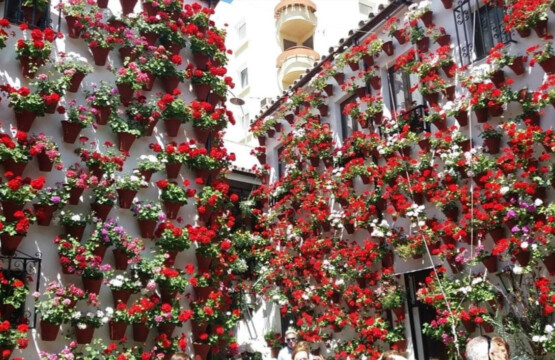
The Gates of Cordoba
Walking through Cordoba is a delight for all the senses, the beauty of its streets, the pleasant smell of its courtyards and…
Read More by administrador

Cordoba is a city of mixtures and contrasts. The culture, its landscapes and even its climatology are a good example of this excellent combination that makes Cordoba one of the most visited cities in Spain and one of the most beautiful in the world.
The history of this World Heritage city is a mixture of cultures that have shaped its neighborhoods, streets and buildings. Cultures that have left their mark on its traditions and customs. Landscapes and life marked by the perfect combination of Roman, Arab, Jewish and Christian.
Also the physiognomy of its surroundings is full of contrates. Plains and mountains bathed by a Guadalquivir that waters corners wherever it crosses. Agricultural landscapes from which emanate their oils and wines, charming places formed naturally by the meanders of its river, arid plains and thick forests or valleys and mountains that leaves us its Sierra Morena.
Cultural, visual and also climatological contrasts, those that leave us temperature changes according to season and zone, well known, and that conform, equally, this complete marriage from which our caliphal city arises.
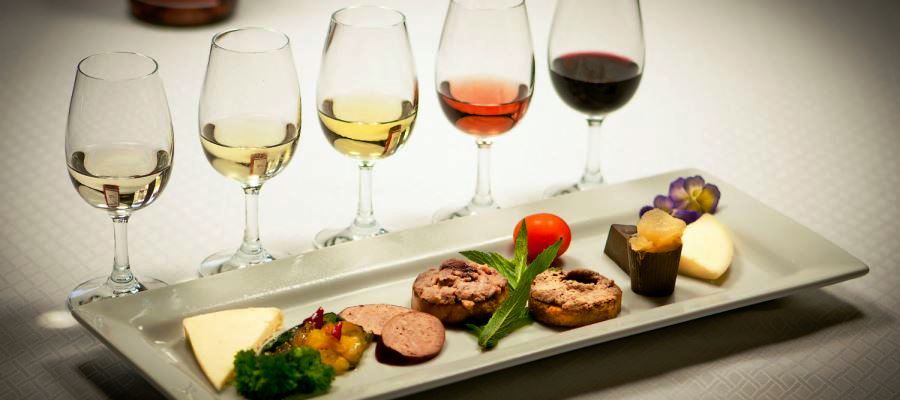
And as we are talking about mixtures, from here we propose one that also adds flavor and smell to this land of Cordoba. A gastronomic proposal that waters famous dishes of the area with wines and oils that this conglomerate of cultures, landscapes and climate also offers us.

We begin this gastronomic proposal with a typical artichokes to the montillana. A typical Cordovan dish that, as its name suggests, is made with a local product noted for its quality, which combines perfectly with the famous wines of Montilla-Moriles, so representative of the wines of Cordoba.
In the area of the Protected Designation of Origin (PDO) Montilla-Moriles we find a semi-continental Mediterranean climate, with warm, long, dry summers and short, relatively mild winters.
The direct effect of this harsh climate during ripening, together with the characteristics of the soils of the area, are decisive for obtaining wines with a marked style that makes them stand out: young white wines, fortified wines, ripe musts used for sweetening, sweet wines made from sunflower oil or fortified liqueur wines.
According to the DOP Montilla-Moriles, the elaboration of these protected wines is made only and exclusively with grapes of varieties such as Pedro Ximénez, Baladí, Verdejo, Moscatel de grano menudo, Chardonnay, Sauvignon Blanc or Macabeo, all of them coming from the production area that makes up a good part of the south of the province of Córdoba.
For these Alchachofas a la montillana, we use the white wine from Montilla-Moriles and its excellent qualities for the preparation of recipes as a base for the sauce of many dishes.
Onion, garlic, ham and saffron complement our proposal, introducing aromas and flavors evocative of previous cultures.

Extra Virgin Olive Oil (EVOO) is the best oil to elaborate a true Cordovan salmorejo. We do not say it, but the experts say it, since, in the culinary field, they assure that the flavor of a good typical salmorejo of the land is determined by the type of oil used and the quality of the same one.
In this sense, it is recommended to opt for its more traditional variant, that is to say, the EVOO, whose absolute quality is obtained by extracting the olive juice through mechanical procedures.
Salmorejo was a cold soup of garlic, bread and salt. It was not until the 18th century when tomato and oil were added to this ancient recipe, both ingredients becoming essential elements of this typical Cordovan dish.
The oil determines so much the final flavor of a Cordovan salmorejo, that it will depend on the type of olive used in the elaboration of the EVOO. Thus, we can obtain a more pronounced and even bitter nuance, using an oil of the picual variety; softer and fruitier, if we opt for the aberquina olive; or a sweeter flavor, with a moderate spiciness and a fine touch of bitterness, if we opt for the hojiblanca, for example.
The province of Cordoba has 371,311 hectares of olive groves, with a growing evolution in recent years and among its achievements it already has four denominations of origin: Baena, Priego de Córdoba, Montoro-Adamuz and Lucena.
Adding its own elixir or green gold to its most distinguished and demanded dish by those who visit us is a guarantee of success for this so Cordovan pairing.


Walking through Cordoba is a delight... Read More

If you want to spend a... Read More

Since 2010 flamenco is Intangible Cultural... Read More
Thank you so much
I blog often and I truly appreciate your information. This great article has truly…


Join The Discussion