
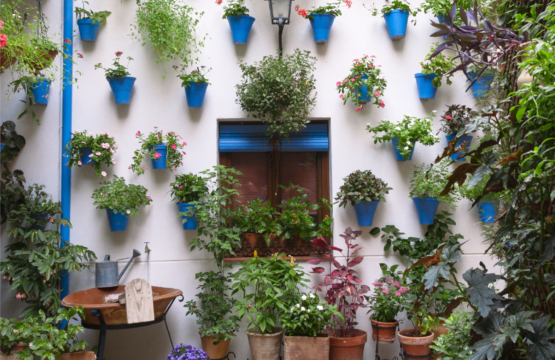
The Gates of Cordoba
Walking through Cordoba is a delight for all the senses, the beauty of its streets, the pleasant smell of its courtyards and…
Read More by administrador
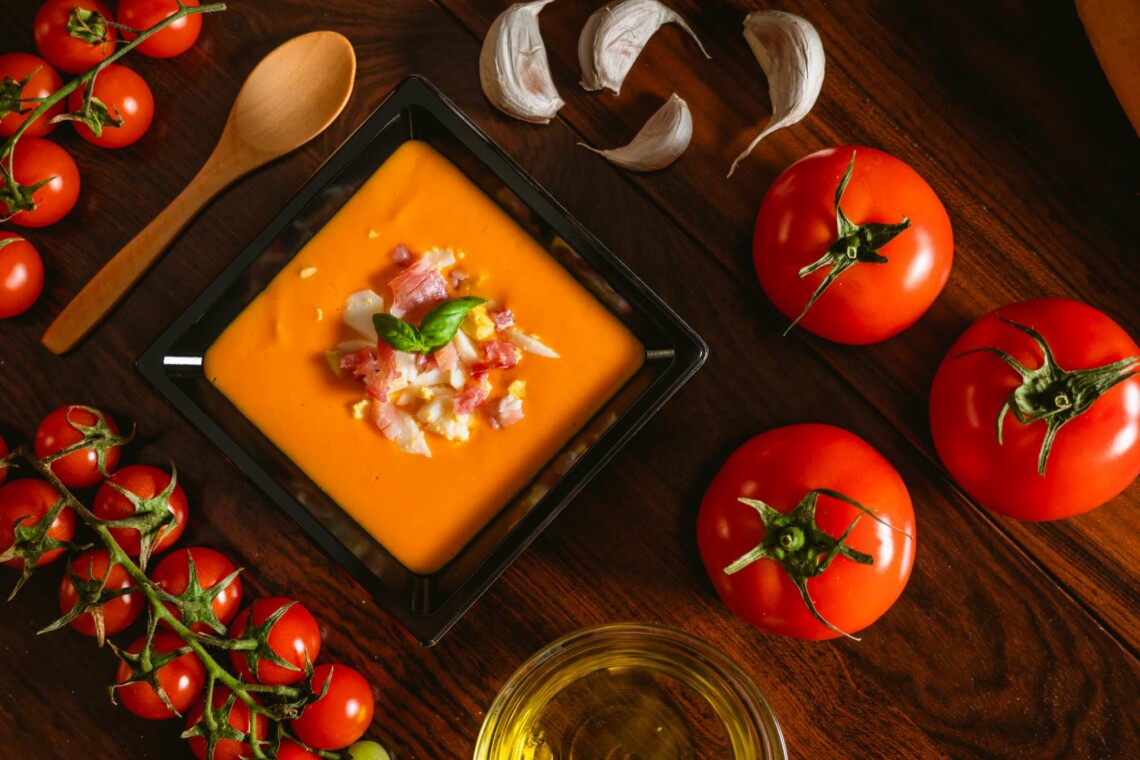
For tastes the colors and, in this case, also the flavors. The salmorejo is a kind of gazpacho or cold puree based on tomato, bread, oil, garlic, and other crushed or beaten ingredients that, according to the Royal Academy of the Spanish Language (RAE), is typical of some areas of Andalusia, although its texture and ingredients vary according to their origin and hence the wide variety of recipes that we can develop when it comes to taste this typical summer dish.
We know that salmorejo is the star of Cordovan gastronomy and that, according to studies, the actual origin of this recipe would be between the nineteenth century and early twentieth century, a time when the main ingredient of salmorejo, as we know it today, the tomato, was introduced.
Until then, this famous cold puree was white, as it was made with bread, a very typical recipe also from Cordoba and known as mazamorra.
Its evolution, since then, depends on the place where it is made, also on tastes and even on the innovation to which it lends itself, giving rise to numerous and exquisite varieties of the mostly known as salmorejo cordobés.
The RAE itself identifies salmorejo with Andalusia, although it is true that it is almost impossible to find two recipes of salmorejos the same in the region.
Among them all, the traditional salmorejo cordobés stands out, although there are also exquisite varieties all over Andalusia.
According to a study by the University of Cordoba and based on the average number of ingredients in the salmorejo in the establishments analyzed in the city, the authentic Cordoban salmorejo is made with the following ingredients:
Another type of Cordovan salmorejo, which we have already talked about, and in which bread predominates as the main ingredient, making it lose its usual red color.
It is a cold soup made with bread, garlic, vinegar, almonds, olive oil and salt, which is usually accompanied by other ingredients such as black olives.
Another variety of salmorejo cordobés that is served hot and accompanied by fried sausages such as bacon, chorizo or black pudding. Slightly lower in calories than the previous ones.
Variety from Seville in which salmorejo is mixed with gazpacho, adding to the recipe green bell pepper, onion, cucumber, hard bread, garlic, hard-boiled egg, olive oil, vinegar and salt.
Beyond Andalusia, salmorejo also has its own characteristics, providing the dish with ingredients that make the difference without losing the essence of the mixture that gives rise to the recipe.
The Andalusian influences are clear in all these varieties, being the base of all of them the mixture of oil, salt and garlic.
Manchego Salmorejo
In the area of Castilla La Mancha, pork liver, flour, salt and paprika are added to the bread and garlic. Ingredients that are mixed over a low heat to become a kind of cream or pate characteristic of the area.
Aragonese Salmorejo
On this occasion, the main ingredient is asparagus, which is sautéed with garlic and parsley and cooked with poached eggs. This dish is usually served with pork loin and sausage.
Extremaduran Salmorejo
Like the previous ones, it includes pork liver and lean pork, which are sautéed with salt, garlic and pepper. Later, onion and parsley are added and it is seasoned with oil and vinegar.
Canarian Salmorejo
In the islands a salmorejo is cooked and used as a sauce for the preparation of different baked recipes. The most famous is rabbit in salmorejo, although it is often used to prepare other meats such as pork or chicken.



Walking through Cordoba is a delight... Read More

If you want to spend a... Read More

Since 2010 flamenco is Intangible Cultural... Read More
Thank you so much
I blog often and I truly appreciate your information. This great article has truly…


Join The Discussion